Tales of speed, stealth and sovereignty
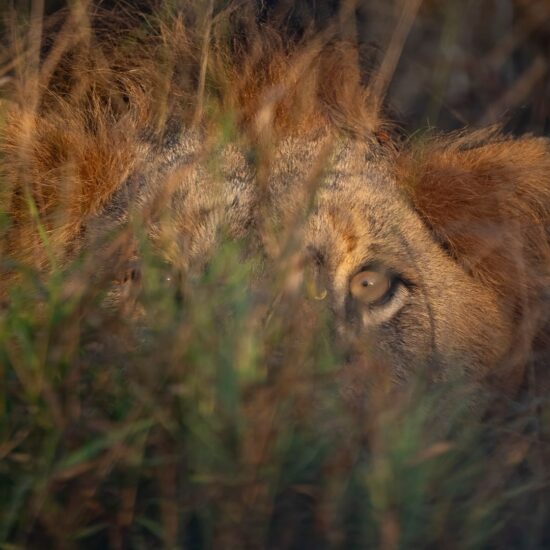
In Tsonga, the language of the Shangaan people, to be brave is to be a lion – ku va ngala. To fight with everything you have is ku lwa xingala, to fight like a lion. The leopard, yingwe, has never been simply an animal to the people who’ve shared this landscape with it, but a symbol of unseen power, of stealth and authority that operates beyond the visible. And the cheetah, xikankanka, crosses the open grassland at a speed the eye can barely follow, the fastest land animal on earth, feared and revered in equal measure by those who’ve lived alongside it for generations…
These aren’t observations that arrived with conservation or the naming of national parks. They’re older than any of that, born from centuries of direct, daily relationship with three animals that have always occupied the same landscape as the people who gave them their names, and whose presence shaped not just the way those people moved through the bush but the way they understood courage, power and the natural order of things.
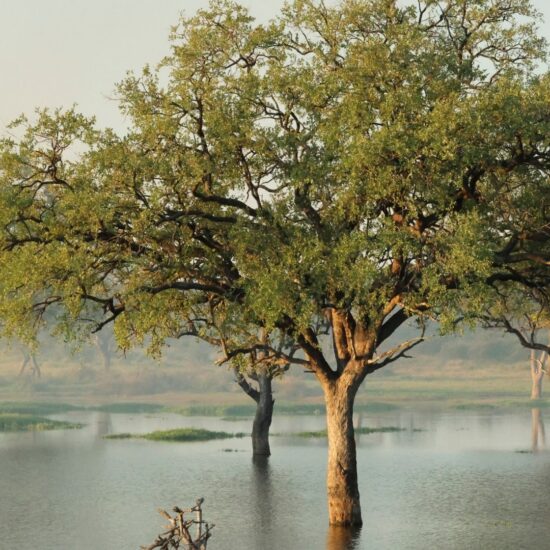
The landscape between Tshokwane River Camp and Satara Plains Camp is, among other things, big cat country. Not in the promotional sense that the phrase has acquired, but in the literal, ecological, unmistakable sense that this terrain has been shaped by the presence of apex predators for millennia, and that everything living in it, the prey species, the smaller carnivores, the birds, the trees, the grasses, has arranged itself in response to that fact. To spend time here with a guide who understands what they’re looking at is to begin to see that arrangement for what it is: one of the most complex and compelling ecological systems on earth, still functioning largely as it has always functioned, with the big cats at its centre.
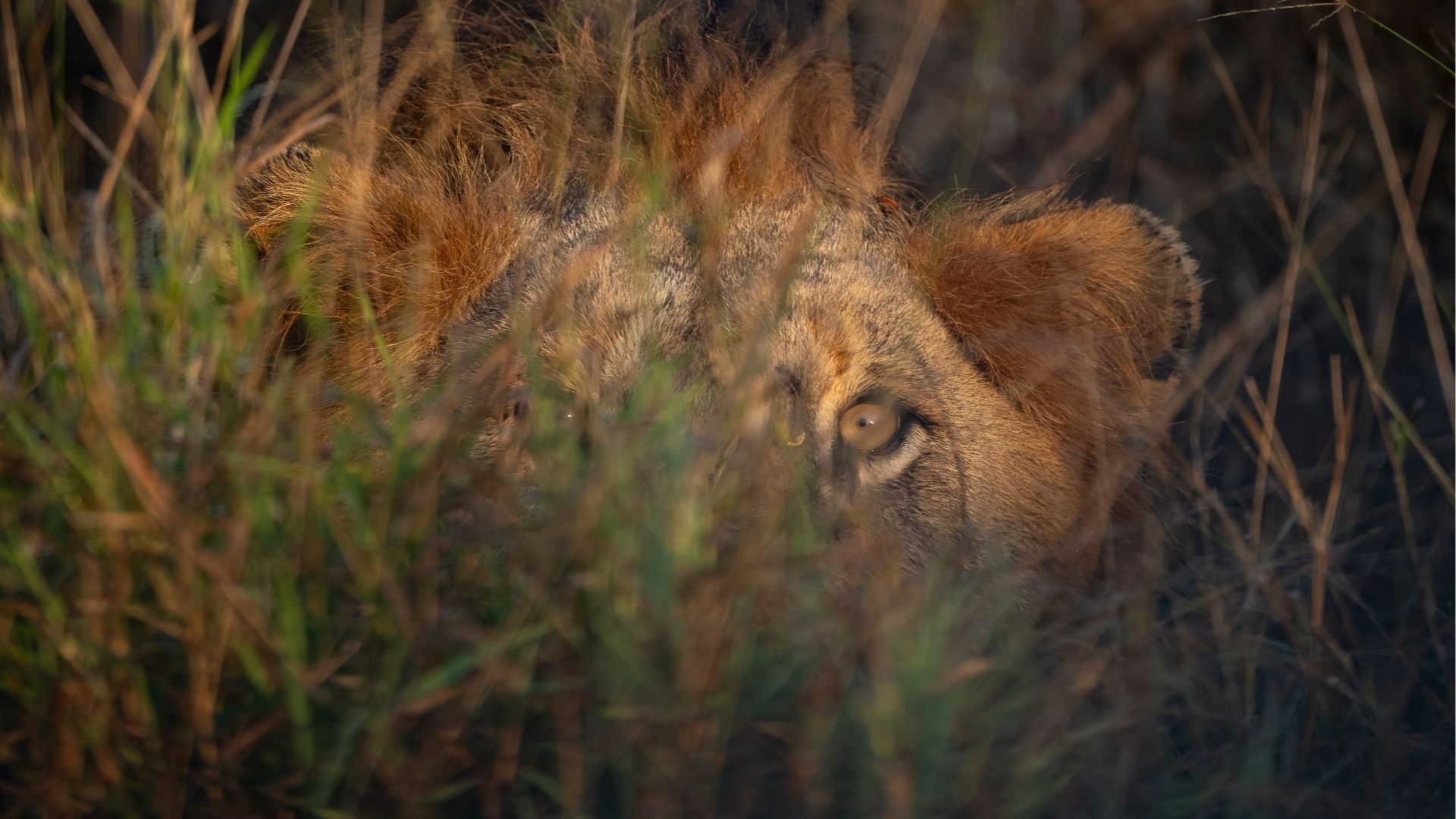
The lion (Panthera leo)
The Satara region carries one of the highest lion densities in the Kruger National Park, and the open savannah grassland that surrounds Satara Plains Camp is the reason. Lions are pursuit predators that depend on visibility and open ground, and this landscape gives them both, the golden grassland stretching out in every direction with a clarity that makes the Satara region feel, in the dry season, like the stage the lions have always known it to be.
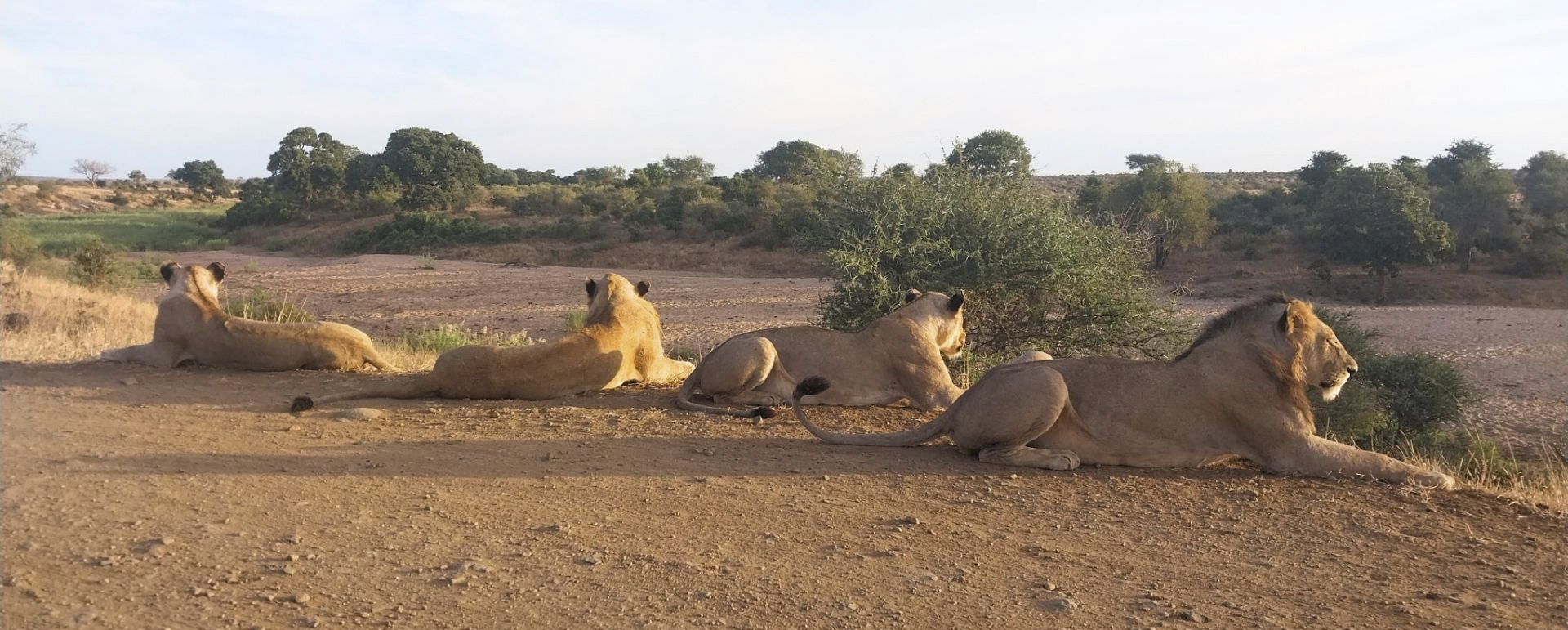
A pride of lions is a social structure of extraordinary complexity, and watching one over several days begins to reveal a world of relationships, hierarchies, rivalries and tenderness that no single sighting can contain. The dominant males hold the territory and defend it with a commitment that costs them enormously in energy and injury. The females do most of the hunting, co-ordinating in ways that suggest a level of collective intelligence that researchers are still working to fully understand. The cubs, hidden in dense cover for the first weeks of their lives, emerge into a social world that will define everything about their futures: which individuals they’ll hunt with, which territories they’ll inherit or be expelled from, which bloodlines they’ll carry forward.
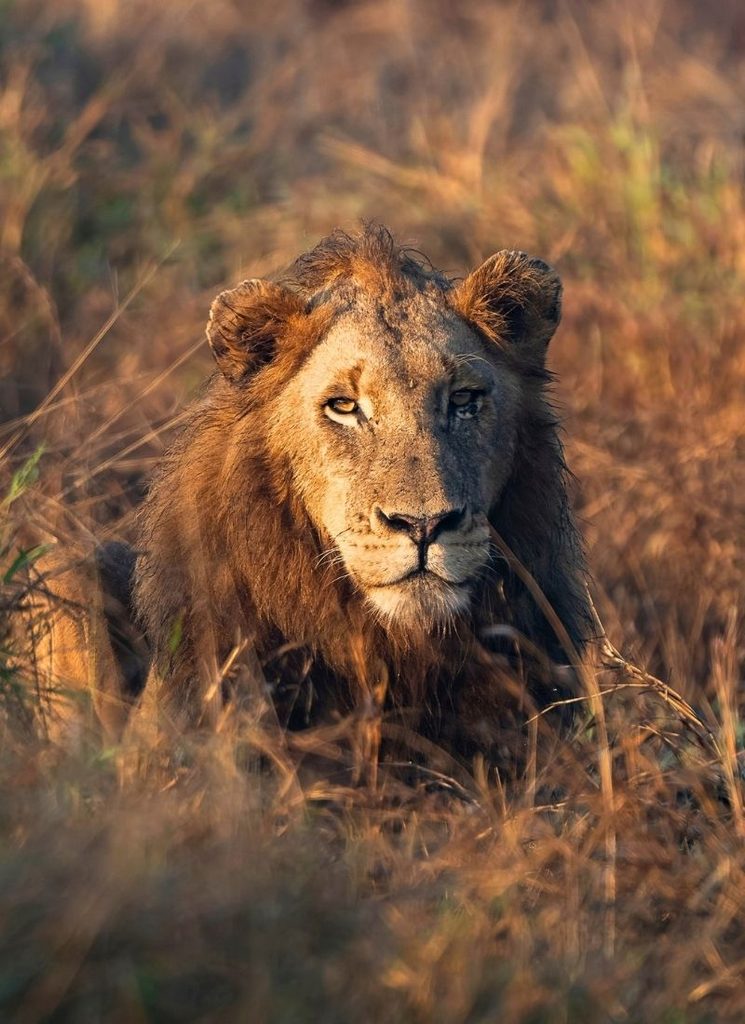
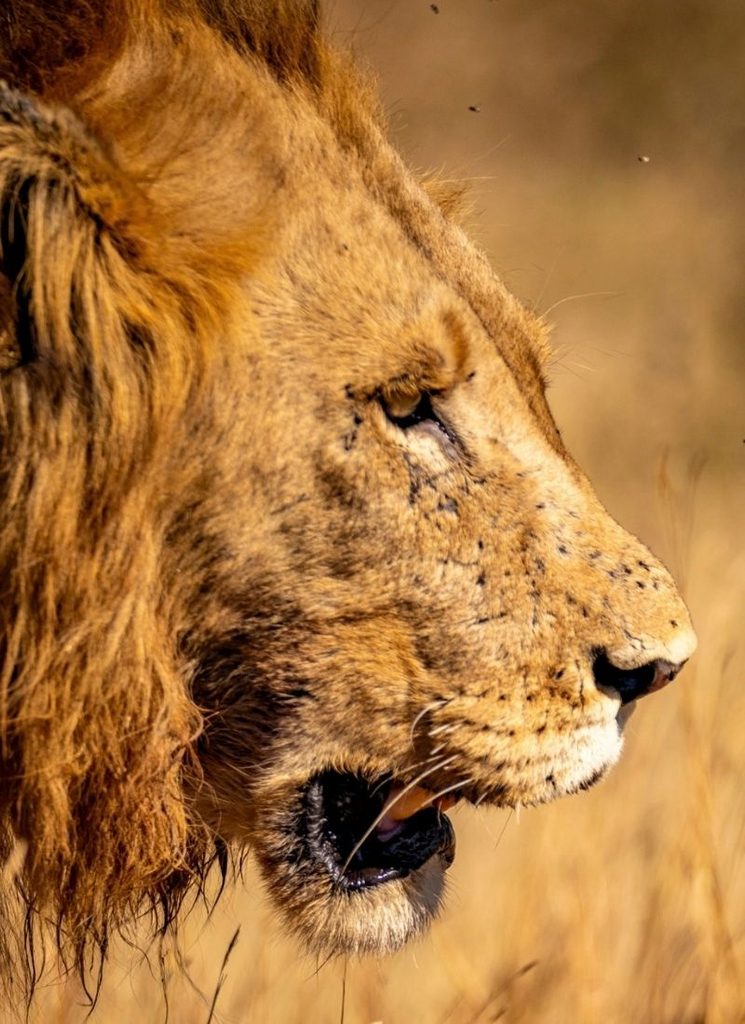

The roar carries for five kilometres in still air, and to hear it at close range in the dark, from a tent with canvas walls and nothing between you and the sound but open night, is one of those experiences that the nervous system files immediately and permanently. Far from frightening, it’s a sound that seems to originate in the landscape itself rather than in any individual animal, recalibrating the listener’s own position in the natural world in a way that’s difficult to shake.
The leopard (Panthera pardus)
The leopard’s name, yingwe, is a word whose original meaning carries the weight of pure sovereignty, pure kingship. In cultures across southern Africa, the leopard has never been simply an animal. It’s a symbol of power that operates beyond the visible, a creature associated with stealth, with secrets, with the kind of authority that doesn’t need to announce itself because its presence is already understood. Leopard skin has been worn by kings and chiefs and those to whom status has been formally conferred, not for its beauty alone but for what it represents: the qualities of the animal itself, its absolute mastery of concealment, its capacity for sudden, devastating action, its complete self-sufficiency in a world that it navigates entirely on its own terms.

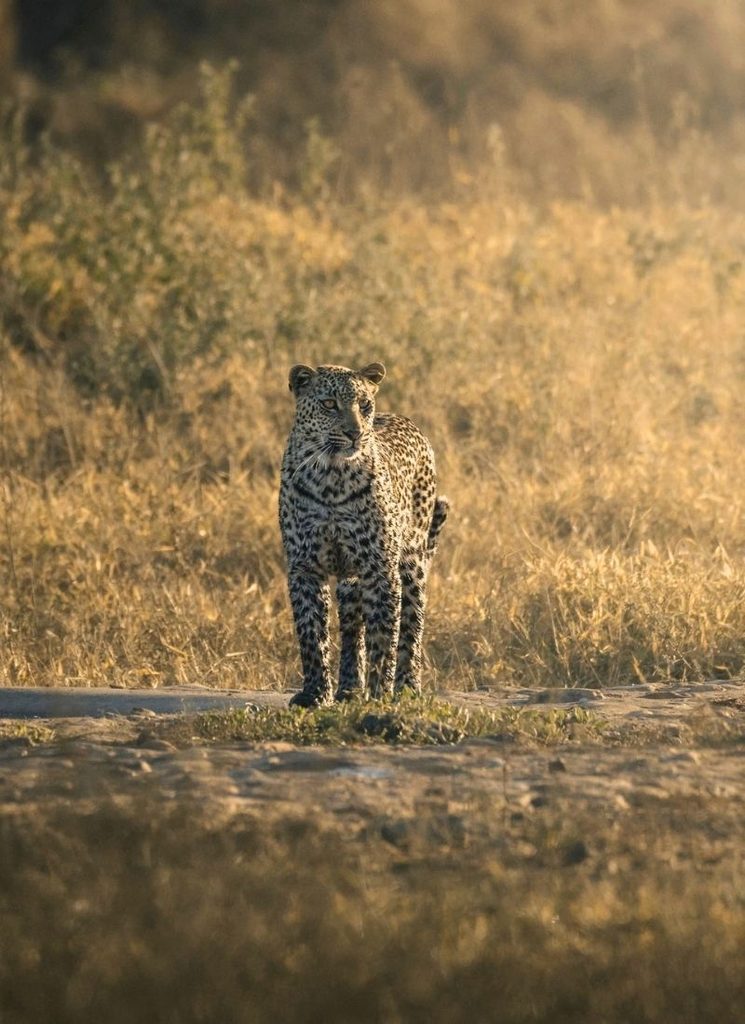
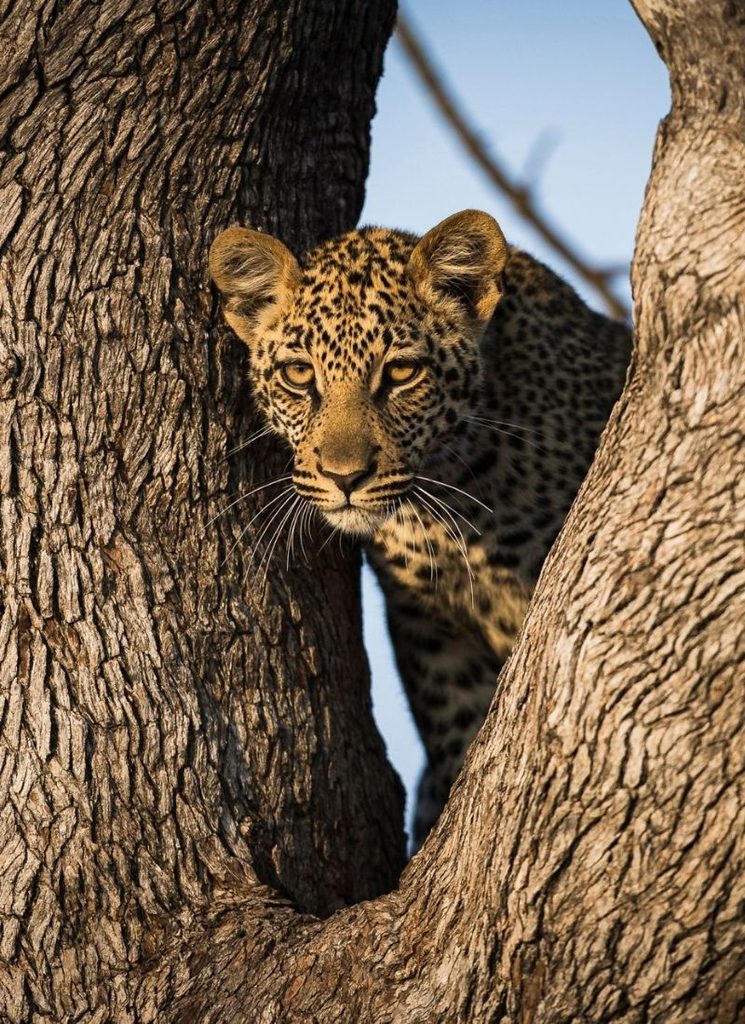
The leopard is the most widely distributed of the big cats and the most adaptable, and the landscape around Tshokwane River Camp, with its riverine thickets, mixed woodland and drainage lines thick with jackalberry and sycamore fig, suits it. That said, the open grasslands around Satara plains are also its hunting ground, it’s that adaptable.
It hunts alone, kills alone, eats alone, and it does all of these things with a technical precision that the other big cats, for all their power and sociability, don’t match. A leopard on a kill twice its weight, hoisted into the fork of a tree, has achieved something that requires strength, timing and spatial intelligence operating simultaneously at their absolute limits.
To see a leopard in this landscape is always a privilege and never entirely predictable. They’re here, moving through the drainage lines and the riverine thickets on schedules entirely their own, visible when they choose to be and invisible when they don’t. The guides who know this terrain well know where to look and what to look for: the shape in the fork of a tree that resolves, after a moment, into a spotted coat and a long tail hanging loose; the impala herd that has stopped moving and stands facing in the same direction with a collective attention that tells you, before you’ve seen anything yourself, that something significant is very close.
The cheetah (Acinonyx jubatus)
The cheetah is built for a single, extraordinary purpose, and everything about its anatomy is a compromise made in service of that purpose. The deep chest accommodates enlarged heart and lungs. The semi-retractable claws grip the ground like running spikes. The long tail acts as a rudder through turns at speed. The black tear marks running from the inner corner of each eye down to the jaw reduce glare and sharpen focus on prey.
The cheetah is, in the most literal sense, a running machine, capable of accelerating from standstill to 100km per hour in three seconds, and it has evolved every one of these features in a landscape very much like the one around Satara Plains Camp, open enough to hunt in and productive enough in prey to make the energetic cost of that extraordinary speed worthwhile.
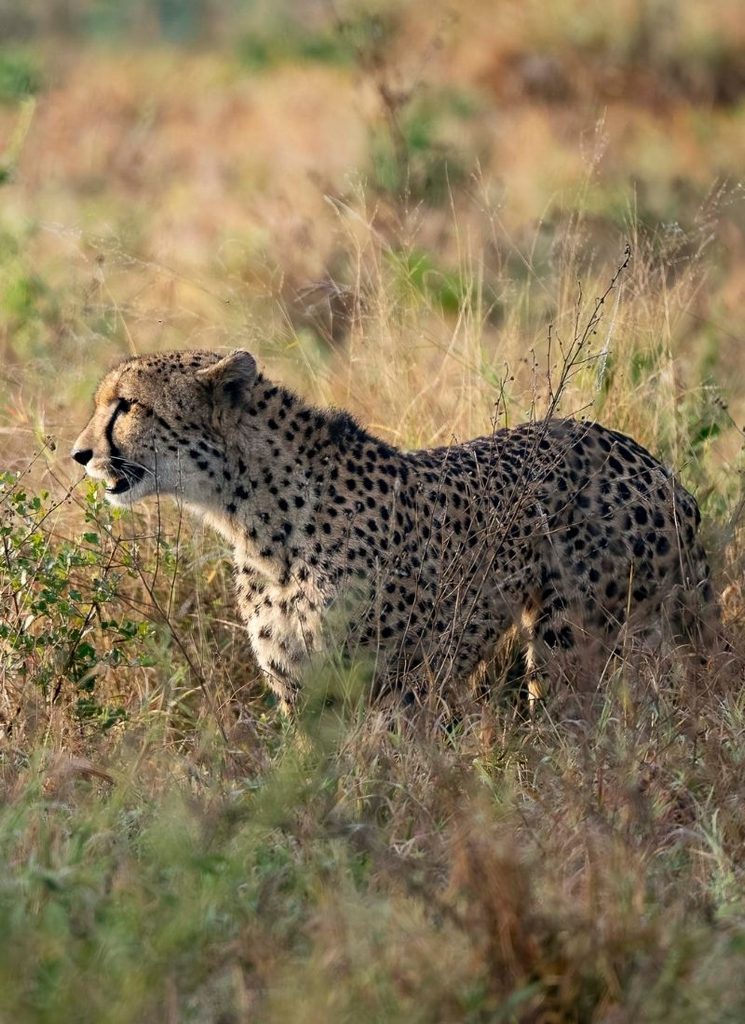
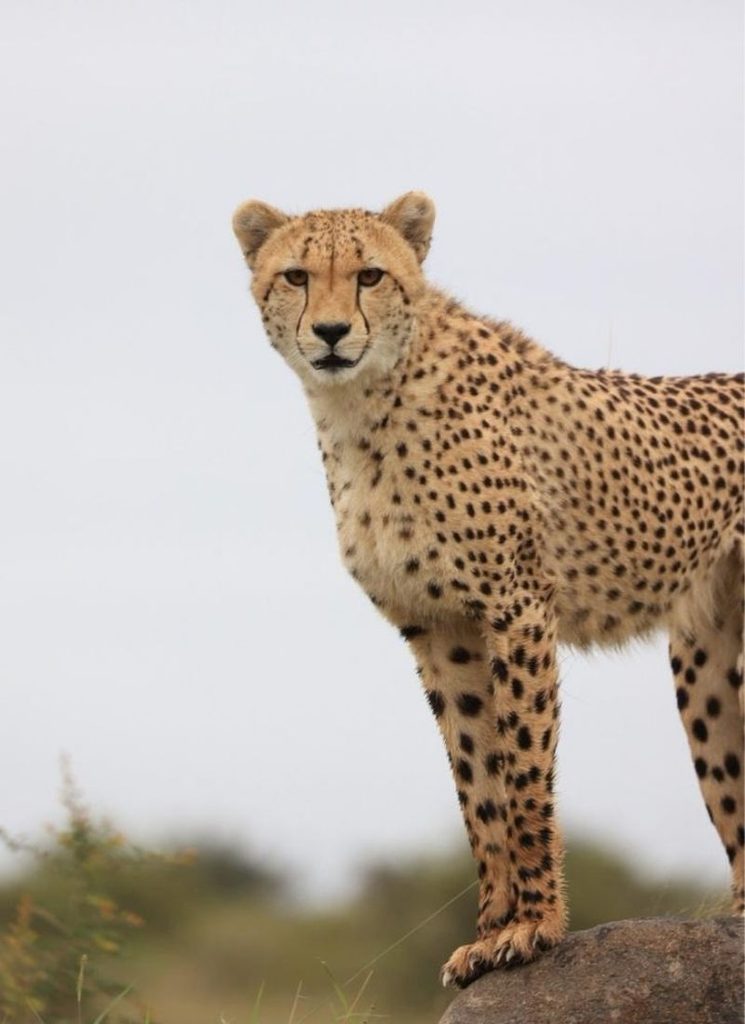

What the cheetah has given up in making itself the fastest land animal on earth is almost everything else. It can’t defend a kill from a lion or a hyena, and it often doesn’t try. It can’t climb a tree to escape or to cache food. It overheats after a sustained chase and needs to rest before it can eat, which is exactly the window that other predators exploit. It lives in the most competitive carnivore community on the continent and it survives not by dominating that community but by being more alert, more cautious and more tactically precise than any of its competitors.
There are fewer than 7,000 cheetah remaining in the wild across the entire African continent, and a sighting in the Kruger is never something to take for granted. The grasslands around Satara are among the best places in the park to encounter them, and the Tshokwane region has produced some remarkable sightings.
The big cats of this landscape have been its defining presence since long before the fences went up and the roads were laid. They’ll be here long after the camps are dismantled and the land has returned to itself at the end of each season. To share their territory for a few days, guided by people who understand what they’re looking at and have the patience to help you understand it too, is to participate, briefly and humbly, in something that has been going on here for an incomprehensibly long time. The Shangaan have always known that and it’s one of the things a few days in this landscape tends to teach everyone else.
Kruger Untamed’s 2026 season has come to a close. Tshokwane River Camp and Satara Plains Camp reopen on 1 May 2027. View our 2027 rates or get in touch to reserve your stay.