Discover the stories behind some of our most magnificent tree species
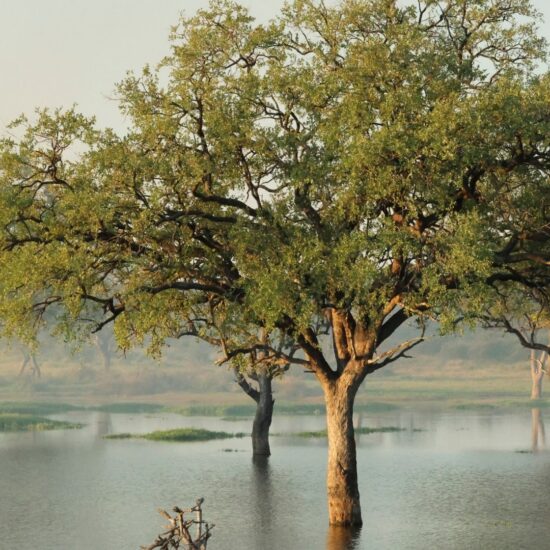
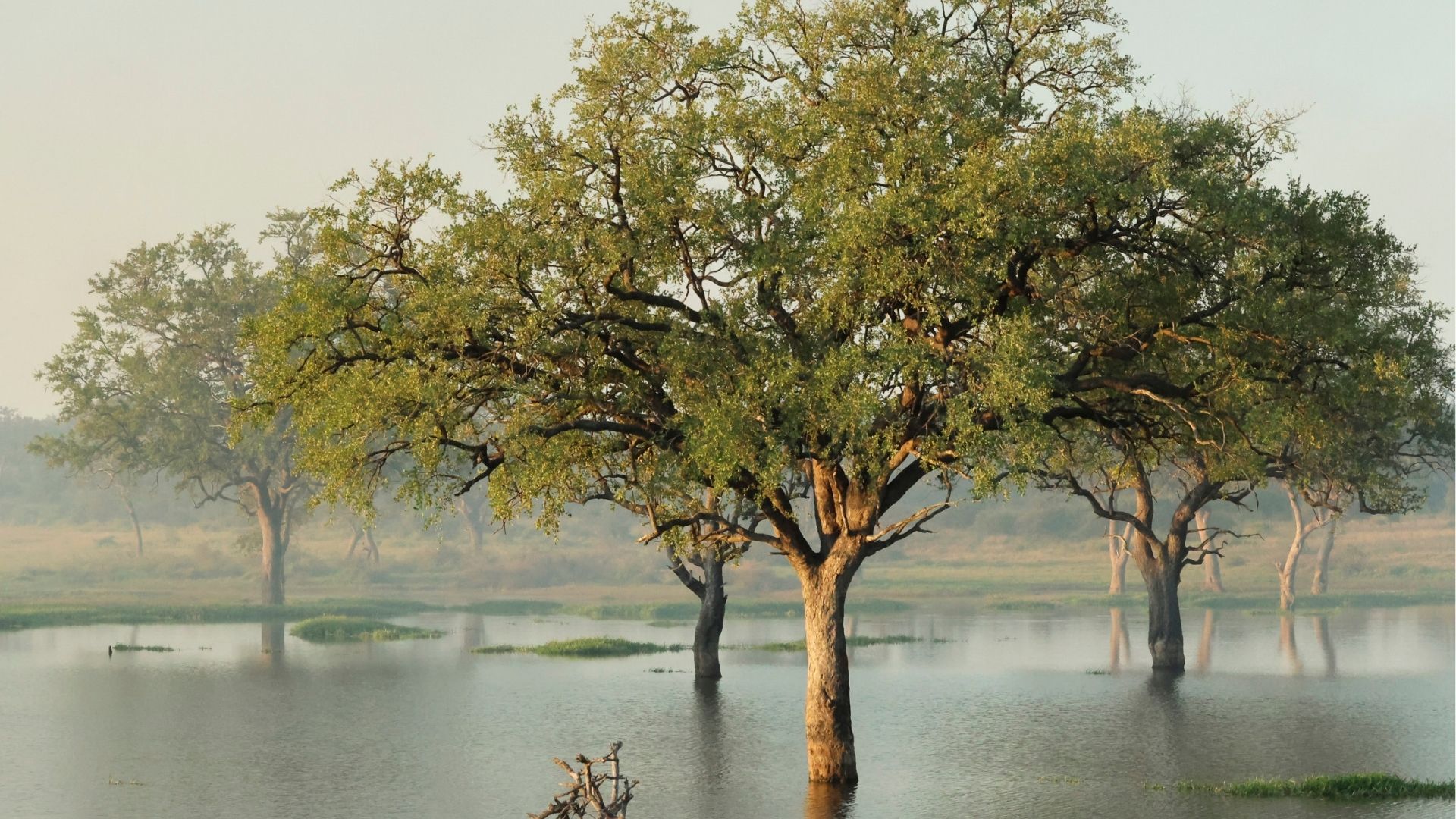
The Kruger National Park has 404 recorded tree species, and the stretch of wilderness that Tshokwane River Camp and Satara Plains Camp sit within contains some of the most remarkable of them. They’ve been here longer than the park itself, longer than any name given to this land, longer than the roads that now pass between them. This is our homage to some of them…
The Kruger National Park’s trees are the unsung heroes of this legendary landscape. The Shangaan people who’ve lived alongside them for centuries didn’t catalogue them. They used them, revered them, read them as a living map of where to find water, food and medicine, and passed that knowledge down through generations in the same way the trees themselves pass their seeds, quietly, purposefully and with absolute faith that something will take root.
What makes these trees extraordinary isn’t just their age or their scale, though both are considerable. It’s the relationships they’ve built and sustained across centuries with every living thing that depends on them, from the largest elephant to the smallest fig wasp, from the leopard that uses a particular branch as a larder to the communities that have read their bark as a compass and their fruit as a calendar. To drive through this landscape with a guide who understands these relationships is to see the bush at an entirely different depth. What follows is an introduction to the trees that make it possible.
The marula (Sclerocarya birrea)
A marula tree in this landscape isn’t simply a marula tree. It’s a gathering place that elephants have been returning to for decades, drawn by a memory of fruit that outlasts any individual season. It’s the source of a fermented beer that’s marked Shangaan celebrations for as long as anyone can trace. It’s a pharmacy, its bark stripped carefully and used to treat fever and digestive ailments with a pharmacological precision that modern science has only recently begun to verify. And in the dry season, stripped of its fruit and standing in that characteristic gnarled, spreading silhouette against a pale sky, it’s a landmark by which this landscape organises itself.
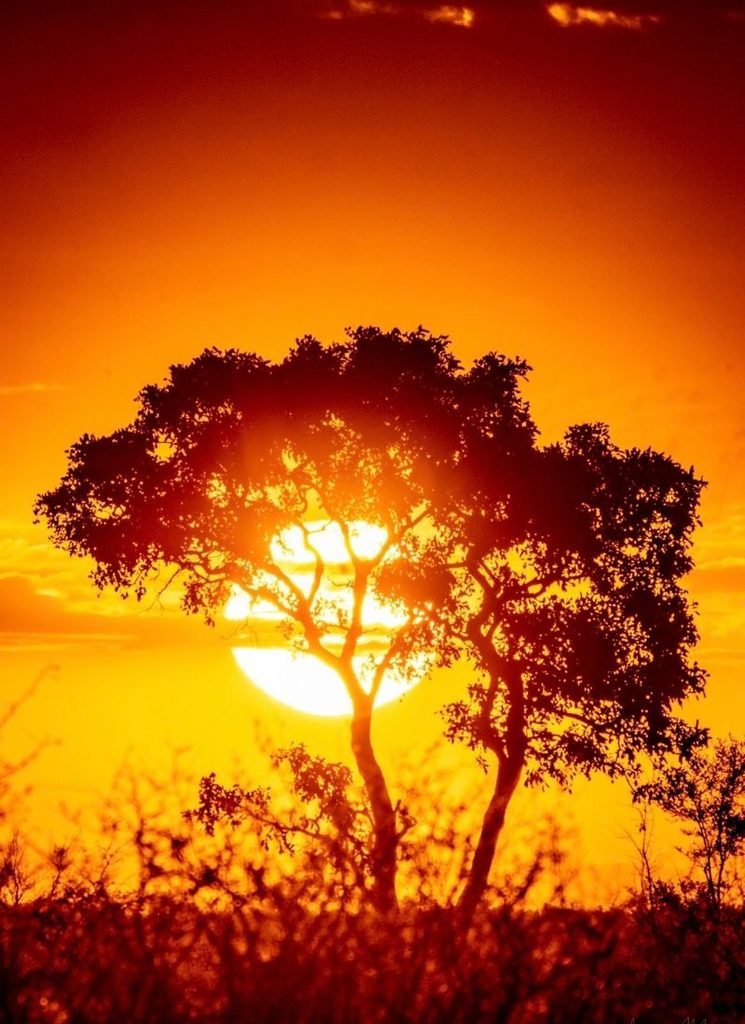
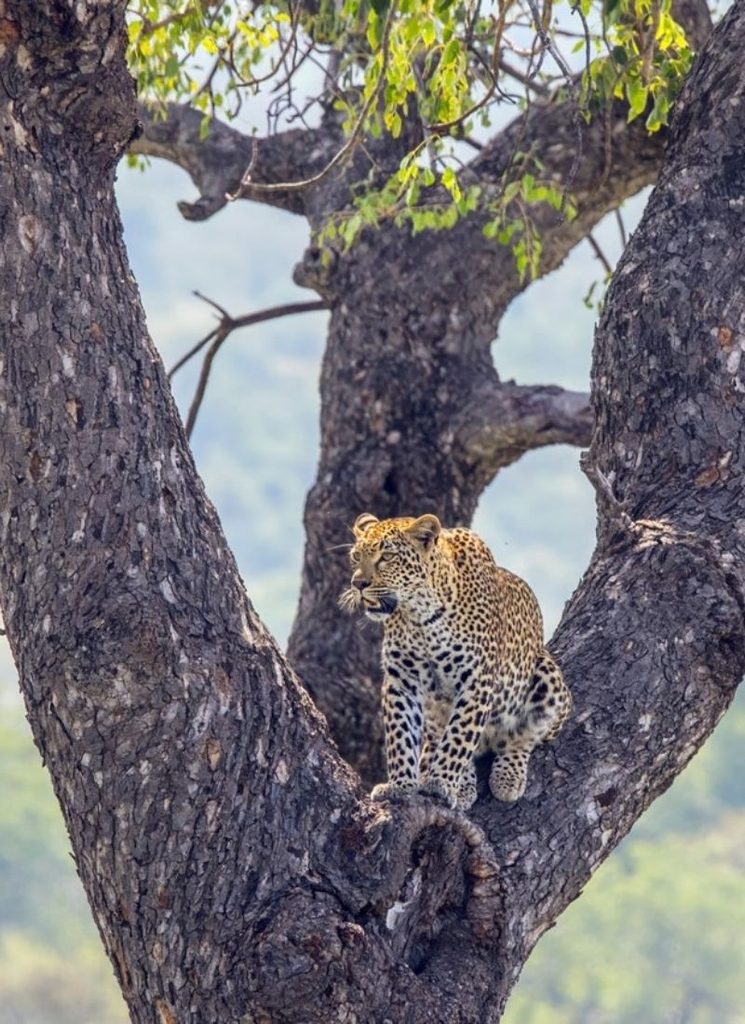

The marula’s fruit ripens between January and March, and the elephants that come for it don’t wander in by accident. They travel towards specific trees they remember from years before, arriving with the kind of navigational certainty that speaks to a relationship built across lifetimes. Kudu, impala and giraffe browse the leaves. The kernel inside the stone yields an oil that the Shangaan have used in cooking and in skin care for generations, and that the modern cosmetics industry has since adopted as its own, marketing as a discovery what was known here centuries ago. The marula feeds and shelters and guides this part of Africa with a generosity that’s entirely characteristic of a tree that has had a very long time to perfect the art.
The knobthorn (Senegalia nigrescens)
The central Kruger is knobthorn and marula savannah, and the knobthorn’s distinctive dark, knobbled trunk rising from golden grass is as much a part of the identity of this landscape as the animals that graze beneath it. It grows in dense thickets and as solitary specimens across the open plains, and in the dry season its sculptural form catches the late afternoon light with a quality that makes it worth stopping for in its own right.
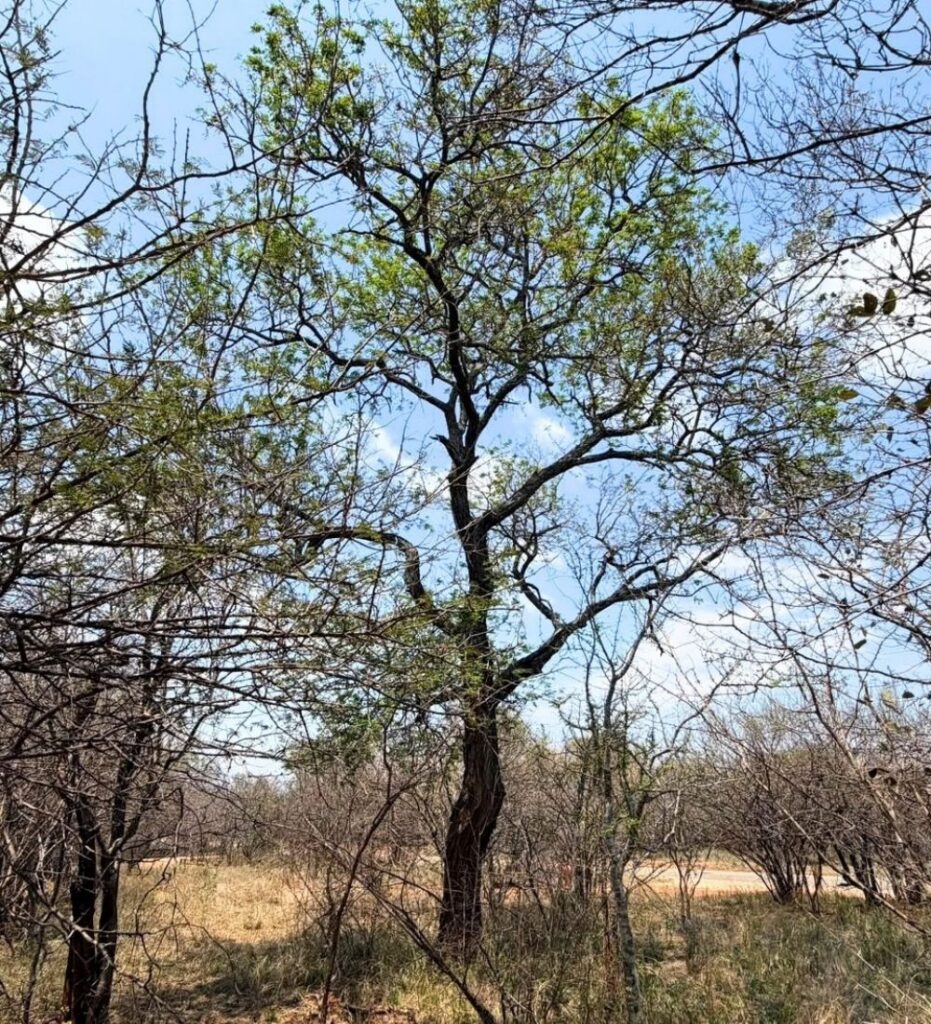
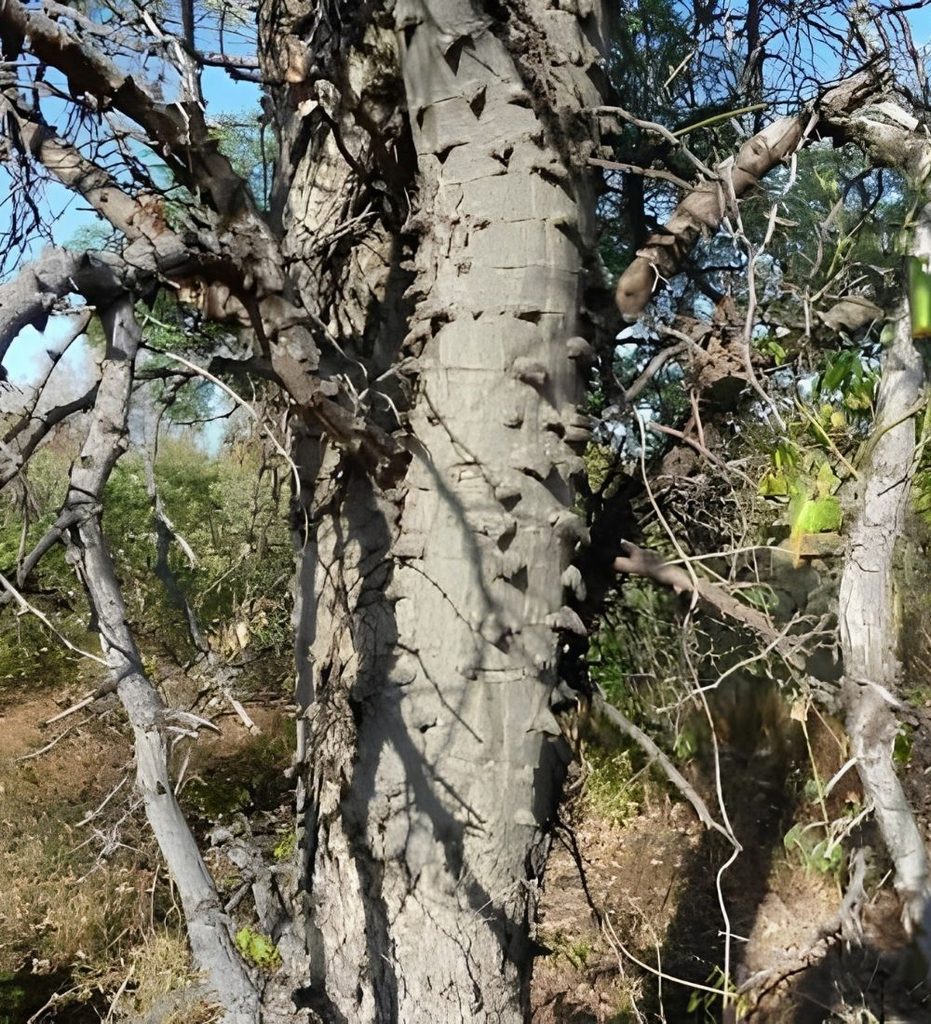
The giraffe knows a knobthorn with an intimacy that borders on devotion, browsing its leaves with a delicate persistence that belies its size, working around the formidable thorns with a dexterity that seems almost improbable given the equipment involved. But the knobthorn’s spring flowering is perhaps its most remarkable performance. It flowers before the leaves emerge, covering itself in cream-coloured spikes that draw sunbirds, weavers and insects in numbers that turn a single tree into a community event. For a few weeks each year a flowering knobthorn is one of the busiest places in the bush, and the guides who know where to find them at the right moment consider it one of the quiet privileges of working in this landscape.
The jackalberry (Diospyros mespiliformis)
The jackalberry grows along drainage lines with the unhurried authority of a tree that knows it has time, and the older specimens, with their deeply fissured dark bark and wide, spreading evergreen crowns, are among the most substantial trees in the Kruger. In the dry winter months, when most of the surrounding trees have shed their leaves, the jackalberry stays green, and that constancy makes it a fixed point in the landscape that animals orient themselves around.

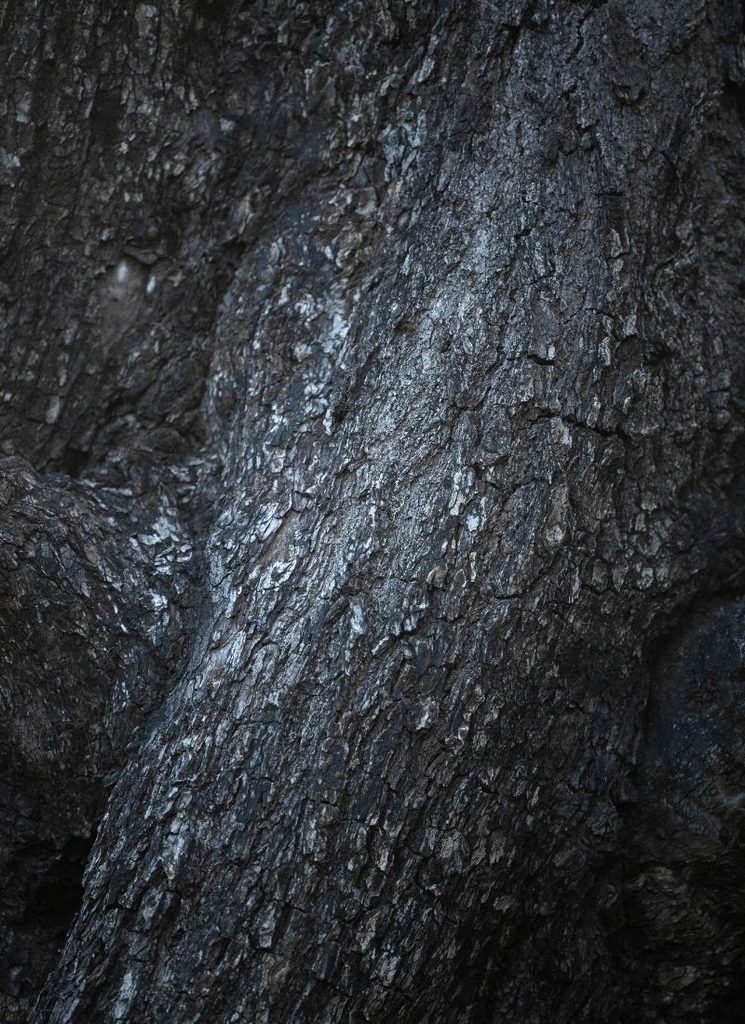

It’s a tree of many communities. Impala and nyala rest in the cool of its shade. Elephants strip its bark and browse its leaves in lean times. Monkeys and baboons work through the small plum-like fruits with focused enthusiasm, and the name itself comes from the jackals that eat the fallen fruit and disperse the seeds through their dung, an arrangement that suits both parties and has been running for a very long time. The leopard’s relationship with the jackalberry is a different kind of intimacy: the wide horizontal branches are ideal for hoisting kills out of reach of hyenas, and the dense year-round canopy conceals both the carcass and the cat from the vultures that would otherwise betray the sighting to every other predator in the area. Some Shangaan communities regard the jackalberry as sacred, a connection to the ancestral world, which gives it a weight in the landscape that goes well beyond ecology.
The baobab (Adansonia digitata)
The baobab belongs, in the popular imagination and in ecological reality, to the far north of the Kruger, where the Limpopo and Pafuri regions support the densest concentrations of these extraordinary trees. The specimens that grow around Tshokwane and Satara are solitary outliers at the southernmost limit of their range within the park, and all the more remarkable for it. The massive, smooth-barked trunk stores thousands of litres of water within its fibrous wood, a living reservoir that has sustained both wildlife and people across centuries of drought, and the canopy, bare for much of the year, gives the tree its famous upside-down appearance, branches reaching skyward like exposed roots.
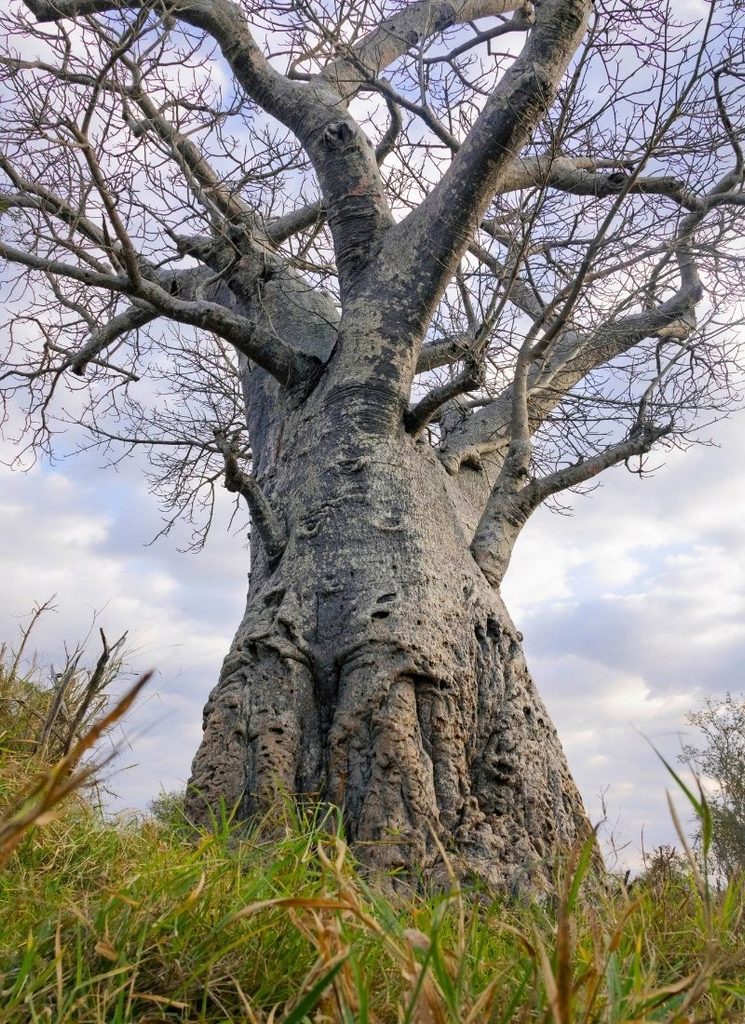


Across Africa, a story exists to explain this. The baobab, goes the most widely told version, complained to the creator about its lot: its flowers lacked colour, its trunk was grotesquely fat, its leaves undistinguished. The creator, unimpressed, yanked it from the ground and replanted it roots upward as punishment. Since that day the tree has worked in silence, paying off its ancient transgression by doing good deeds, and the list of those deeds is long. Its fruit has been eaten and used medicinally by the Shangaan for generations. Elephants strip its bark to reach the moisture-rich wood beneath. The hollows that form in old specimens over centuries become roosting sites for bats and nesting cavities for hornbills. Some baobabs in the Kruger are believed to be several thousand years old, and to stand beside one is to feel the particular quality of humility that only the very old and the very large can produce.
The leadwood (Combretum imberbe)
Some of the leadwoods in the Kruger have been standing for over a thousand years, and they carry that age without apology. The wood is so dense it sinks in water, so hard that cutting it produces sparks, and so resistant to termites and fire that a dead leadwood remains standing long after everything around it has fallen and returned to the soil. This is why the bare, pale grey forms of dead leadwoods are one of the defining images of the Lowveld skyline. They outlast their own lives by centuries, becoming platforms and perches and landmarks in a landscape that continues to change around them.
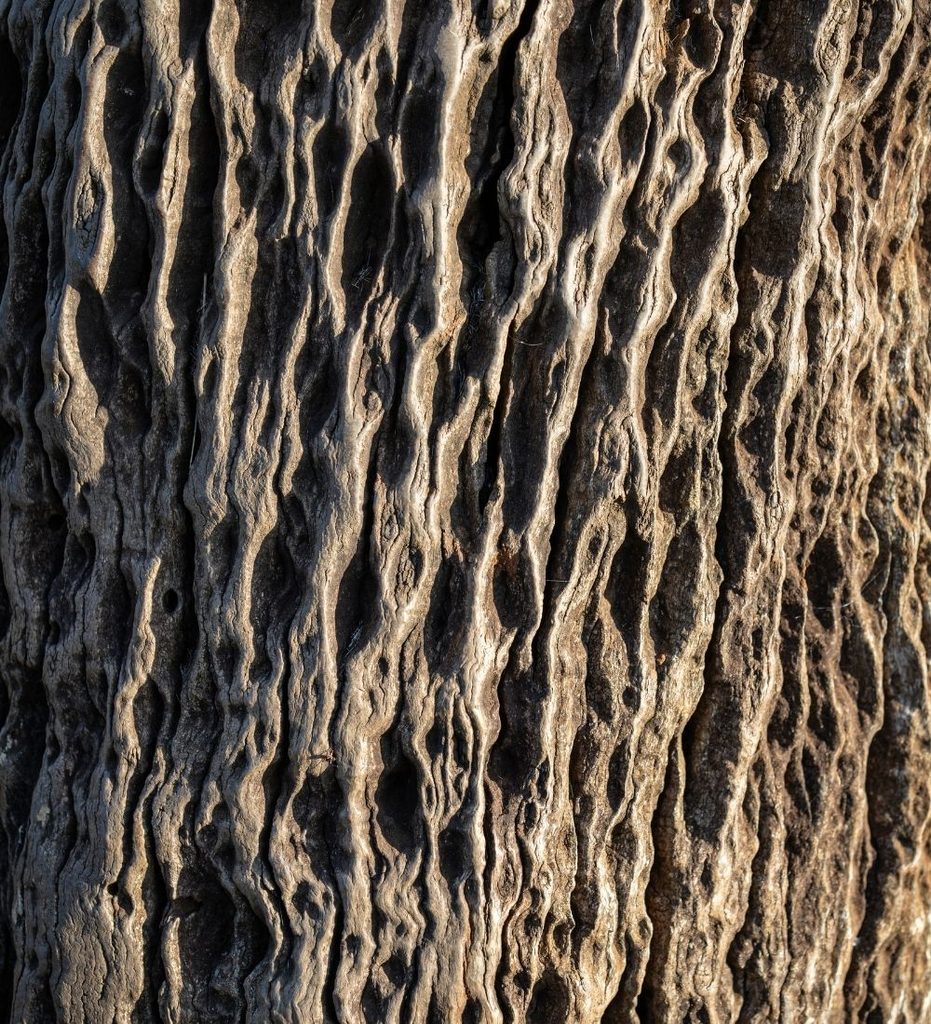

In the old Kruger, before conservation reframed the relationship between people and this land, leadwood was used for railway sleepers and mine props, its extraordinary density making it ideal for purposes that required permanence. It was also used as a road marker, travellers cutting signs into the bark to indicate direction, and some of those marks are still visible on living trees in the park today, a human story written into the wood of a tree that will outlast everything that follows. Vultures and large raptors use the bare upper branches of dead leadwoods as lookout posts, their weight supported by wood that’s been dead for a century but shows no sign of yielding. In the evenings, a dead leadwood silhouetted against a burning sky is one of those sights that guests reach for a camera to capture and then quietly put it down again, understanding that the image they want is already inside them.
The sycamore fig (Ficus sycomorus)
The sycamore fig produces fruit in almost every month of the year, which in a landscape of sharp seasonal scarcity makes it something close to indispensable. More than a hundred bird species feed in its canopy across the region. Monkeys, baboons, bushpigs and porcupines compete for the fruit. Elephants consume the leaves, the bark and the figs themselves with their customary thoroughness. It’s a democracy of the bush, a tree that gives to almost everyone and withholds from almost no one, and its presence along the drainage lines of this part of the Kruger is one of the ecological anchors of the landscape.


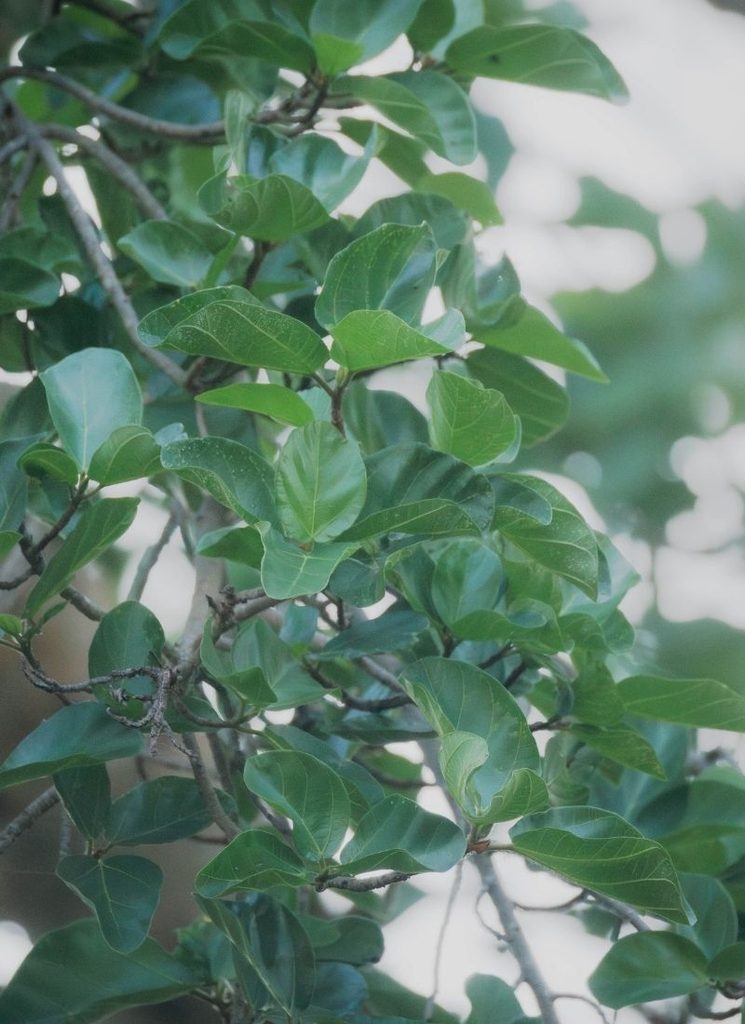
The tree’s pollination story belongs to a category of natural history that sounds like invention: every species of fig depends on a single, dedicated species of tiny fig wasp for pollination, the wasp entering the fig through a minute opening to lay its eggs and, in doing so, completing the tree’s reproductive cycle. The relationship is so specific and so mutually dependent that neither can survive without the other, and it’s been operating in essentially the same form for tens of millions of years. Large sycamore figs along the rivers have served as meeting places and resting points for Shangaan communities in this landscape for as long as people have walked it, and the shade they cast is the kind that makes you understand, immediately and physically, why a tree can become a gathering place.
The sausage tree (Kigelia africana)
The sausage tree announces itself without subtlety. Its fruit, cylindrical and grey-brown and hanging on long rope-like stalks below the crown, grows to a metre in length and can weigh ten kilograms, and it looks precisely and inescapably like what it’s named after. First-time visitors to this part of the Kruger tend to stop and stare at a sausage tree with an expression that mixes genuine awe with a suspicion that the bush is having them on. It isn’t. This is simply what Kigelia africana looks like, and it’s looked this way for considerably longer than anyone watching it has been alive.
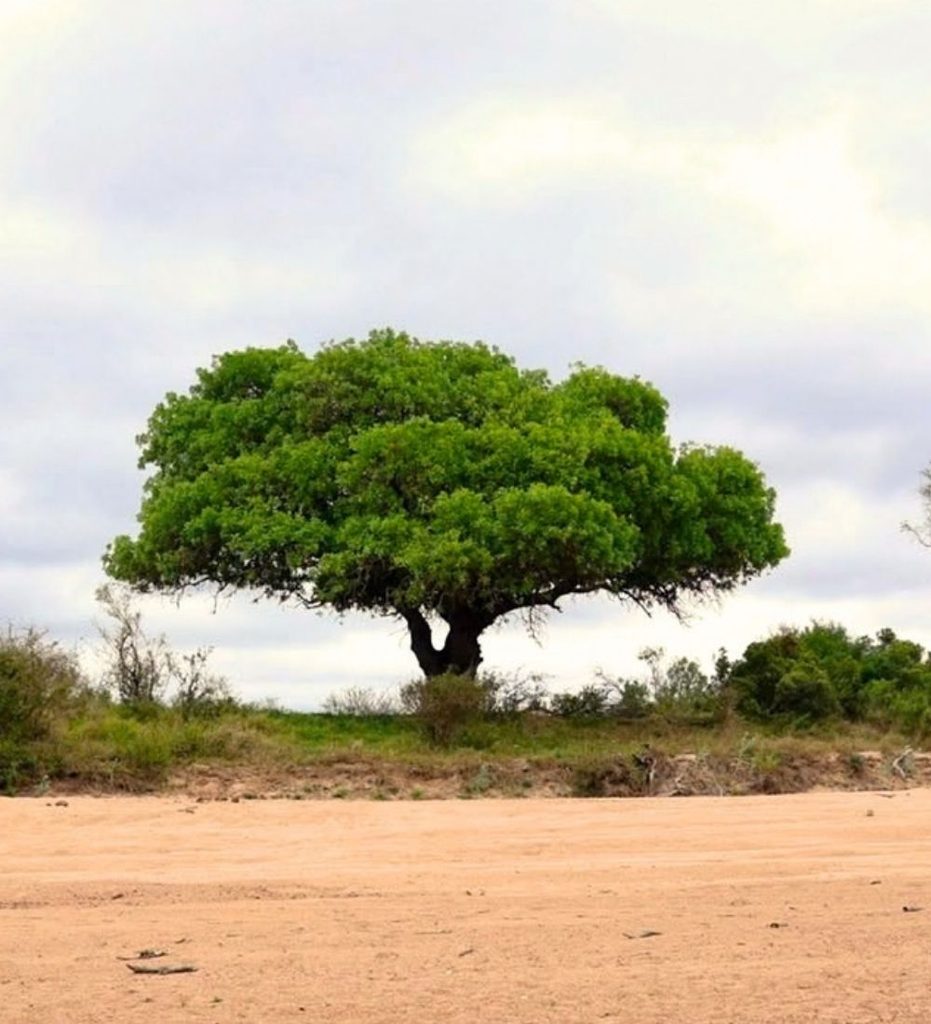
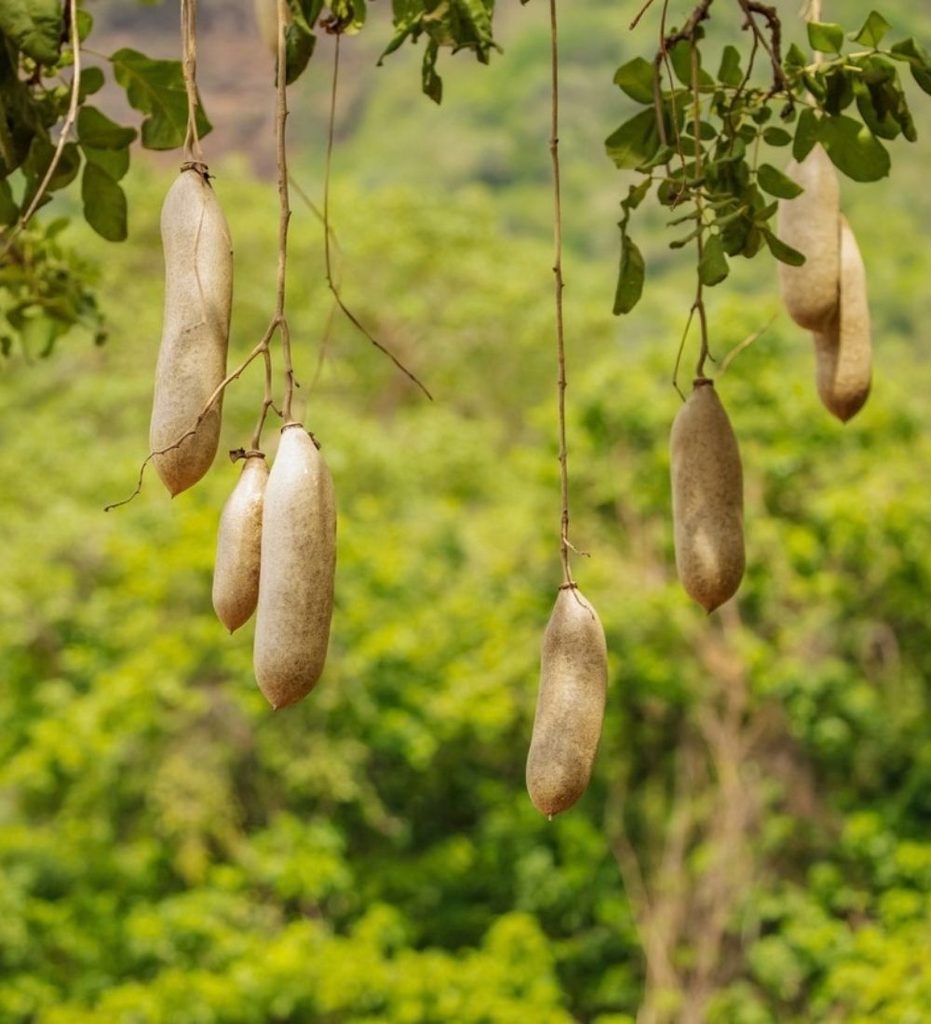
It’s one of the first trees to flower at the start of spring, producing large, dark red, tulip-shaped blooms on the same pendulous stalks as the fruit, and the flowering draws one of the most remarkable assemblages of wildlife of any event in the Kruger calendar. Sunbirds, orioles, bulbuls, weavers and parrots arrive in numbers. Epauletted fruit bats pollinate the flowers at night, drawn by the faint fermented scent the blooms produce after dark. Young monkeys sink their faces into the open flowers to reach the nectar. Duiker, kudu and impala eat the fallen blossoms from the ground. In traditional medicine across southern and central Africa, the fruit’s been used to treat skin conditions for centuries, and some communities regard the tree as a guardian of health, its properties warding off both physical and spiritual ill. To spend an hour beside a flowering sausage tree in September is to understand, in the most immediate way possible, how interconnected everything in this landscape actually is.
The trees of this landscape are as worth knowing as the animals that move between them. Ask your guide to stop at the next one you pass. Ask what it’s called, what it feeds, what it’s been used for and by whom, and how long it’s been standing in that particular spot. The bush is always telling a story, and the trees are almost always where it begins.
Kruger Untamed’s 2026 season at Tshokwane River Camp and Satara Plains Camp has come to a close. Bookings are open for the 2027 season, beginning on 1 May.