
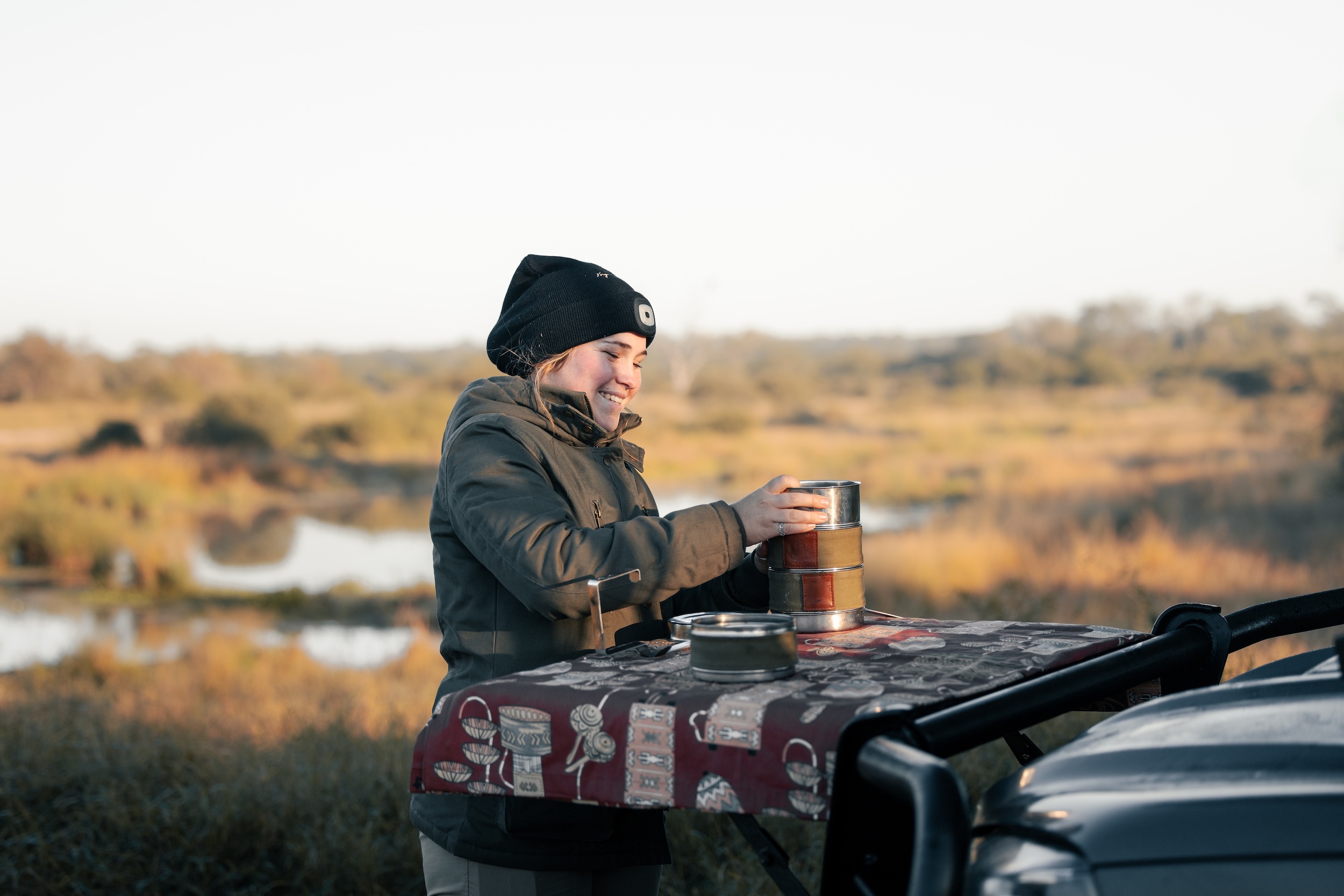
The African winter has a way of surprising even the most seasoned travellers
There is a misconception that follows the Kruger National Park around the world, and it arrives most reliably in the luggage of first-time international visitors: the assumption that Africa is always warm. It isn’t, and not in a polite, slightly-chilly way. On an open game viewer at six in the morning in July, with the temperature sitting in the single digits and the vehicle moving through semi darkness, the cold is a genuine, committed, fully present participant in the experience. Guests who arrive having packed for a warm-weather holiday discover this with a speed and completeness that tends to be character-building. So here’s our guide to avoiding that nip in the air!
The reassuring news is that a Kruger winter day is not relentlessly cold. By mid-morning the sun has usually done its work, and early afternoons in July regularly reach a comfortable 25 to 26 deg C under skies of improbable blue. The challenge is that a single winter day in the Kruger can span a temperature range of 20 degrees or more, from a bone-cold pre-dawn start to a warm, golden afternoon, and dressing intelligently for that range, in a context where luggage needs to be manageable and game drive seating is limited, is the central packing task of any winter safari.
Just how cold does it get?
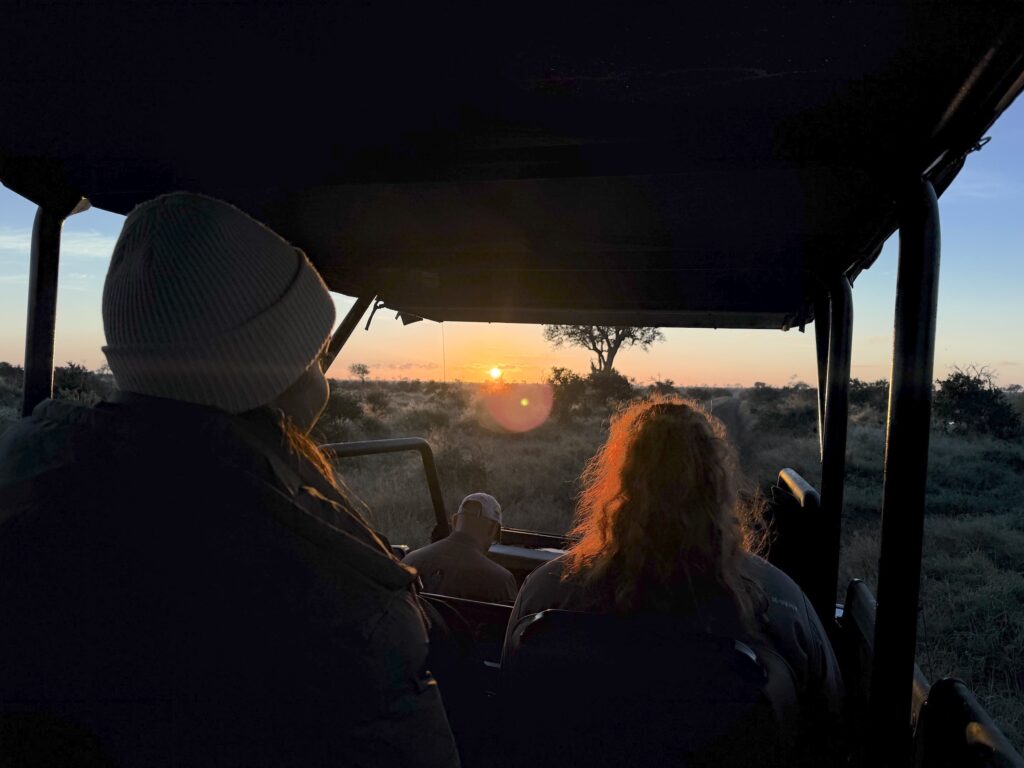
Average minimum temperatures in the central Kruger through June and July sit between 7 and 13 deg C, occasionally dropping lower in open terrain like the plains around Satara where there’s no tree cover to hold the overnight warmth. By contrast, afternoon maximums for the same months regularly reach 25 deg C, and August and September warm up progressively as the season moves towards its close, with September daytime temperatures sometimes nudging 30 degrees in the middle of the day and the minimum rising to around 16 deg C.
None of this quite prepares guests for the wind chill of a moving game viewer, which has a way of making a cold morning feel considerably more persuasive than the thermometer suggests. Exposed hands, face and neck will remind you of this within minutes of setting off on an early morning drive, and the guests who arrive with good gloves and a warm hat are invariably the ones enjoying themselves while everyone else is quietly reconsidering their luggage choices.
The principle of layering
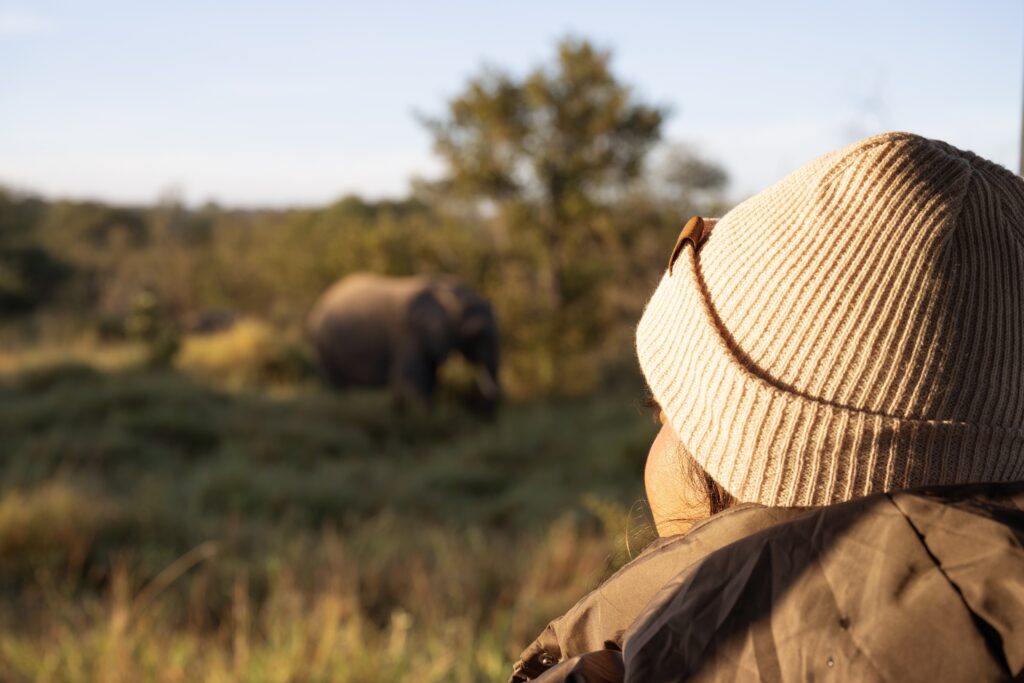
The most sensible approach to dressing for a Kruger winter is a layering system that lets you add and remove clothing as the temperature shifts without it becoming a performance. The principle is simple enough: start with everything you need for the coldest part of the day, which is always the pre-dawn game drive, and peel back progressively as the morning warms. By lunch you’ll likely be down to a single layer. By the afternoon drive, you’ll be rebuilding.
Start with a T-shirt or vest, then add a thermal layer, which is arguably the single most important garment you’ll bring. Over that you can add a jersey, a warm fleece mid-layer for extra insulation, and a puffer outer jacket completes the picture, along with a beanie hat, gloves and scarf. As the morning warms, the puffer jacket comes off first, then the jersey and thermal layer, and by mid-morning you’re in a T-shirt as the bush is a different and considerably more forgiving place than it was at dawn.
What to bring
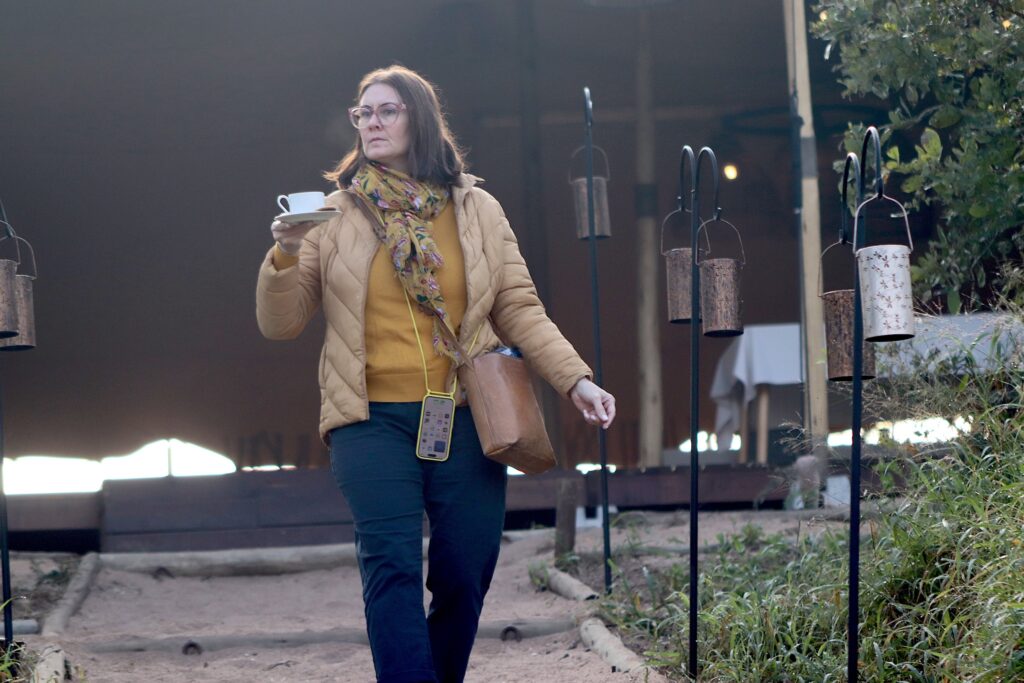
For the cold hours, a good quality puffer jacket or a mid-weight fleece and/or a packable windproof jacket are essentials. Add to those a warm hat that covers the ears, a buff or scarf for the draught that inevitably finds its way down an open collar, and a pair of thermal gloves warm enough to make a genuine difference but dextrous enough to handle a camera. Lightweight jerseys or jumpers are great, as are thick socks and comfortable closed shoes or light boots, which are worth having for morning drives and walking safaris, where the grass can be cold and wet underfoot in the early hours.
For the warmer parts of the day, neutral-coloured clothing in khaki, olive, tan or brown is the practical and stylistic standard of the bush. You can comfortably do T-shirts, shorts and flip flops in the middle of the day. A wide-brimmed hat or baseball cap are good as is sunscreen and sunglasses which are as essential in winter as in summer, because the Lowveld sun is not subtle regardless of the season, and a light buff or scarf serves double duty across the temperature swing of the day.
The small things that make a difference
A good headlamp or torch is genuinely useful on a winter safari, particularly for early morning departures when the path between tent and game viewer is dark and the bush around the camp is wide awake and going about its business. Camera batteries drain faster in cold conditions than in warm, and keeping a spare in an inside pocket during early drives is a habit worth forming. A small daypack for the game viewer is great as somewhere to consolidate the layers as they come off or store them for adding later, a water bottle, binoculars and camera.
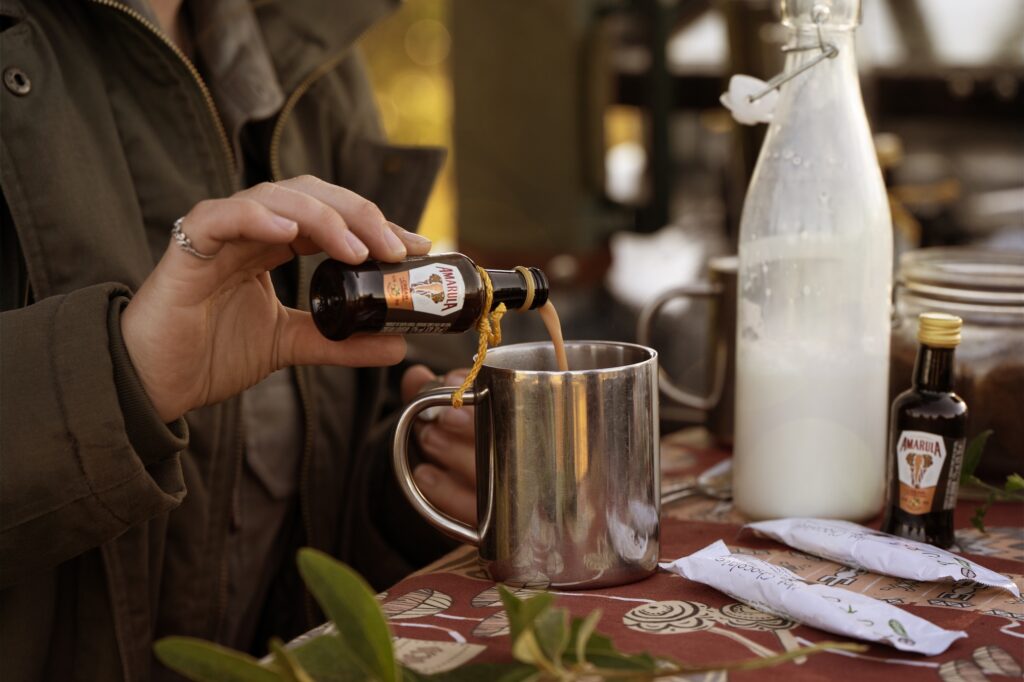
It’s called the dry season for a reason too, as the lack of moisture in the air tends to desiccate things, especially skin and lips, so lip balm and moisturiser at this time of year are especially useful, as are tissues and a peaked cap for when it gets too warm for a beanie.
A Kruger winter, for those who come properly prepared, is one of the most physically and sensory pleasurable wildlife experiences on earth. The cold is part of what makes it extraordinary: the sharp, clean air, the stars overhead as the vehicle moves through the darkness, the particular quality of light as a winter dawn breaks over the Lowveld. Dress for it properly and you won’t simply endure it. You’ll come to love it as one of the defining qualities of the season, and you’ll pack for it deliberately on every visit that follows.
Join us at Tshokwane River Camp and Satara Plains Camp, which opens on 1 July 2026.
Tshokwane River Camp is open and Satara Plains Camp opens on 1 July after a rain-induced delay. Both will remain open through the winter season until the end of September. already are. Experience the wilderness for yourself.


