Life is rich and diverse beyond the Big Five!
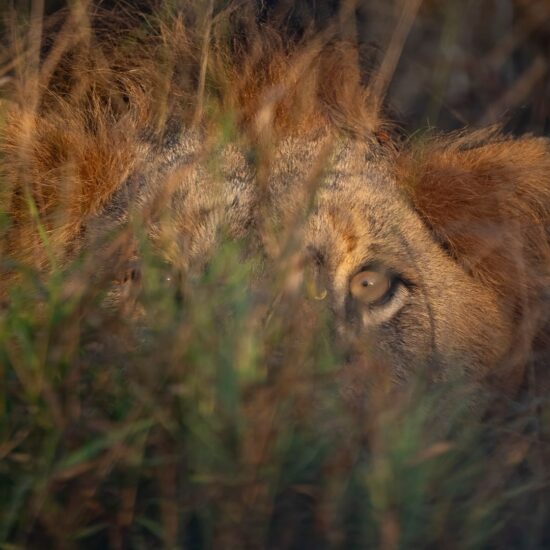
When most travellers picture a Kruger safari, their minds leap straight to lions, elephants, and herds of buffalo. But there is another world here – quieter, older, and deeply woven into the fabric of the land. At Kruger Untamed’s seasonal camps – Tshokwane River Camp and Satara Plains Camp – guests have the rare chance to slow down, look closer, and discover the small wonders that make this wilderness truly extraordinary.
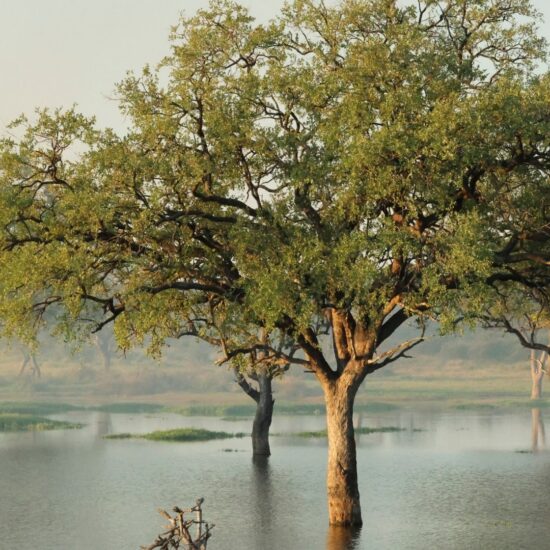
The beauty of both camps lies in their contrasting habitats. Tshokwane River Camp sits tucked along the banks of the Ripape River, in a swathe of tall riverine trees, while Satara Plains Camp rests on the threshold of the park’s vast, open grasslands, bordered by seasonal rivers and streams and their associated riparian woodland. Between them, these two places offer an incredibly rich and varied canvas – and a different cast of small, secretive characters waiting to be noticed.
At Tshokwane, the slow winter months are not as empty as they first appear. While summer’s chorus of frogs and buzzing insects fades, the dry season reveals the presence of some of Kruger’s most unusual inhabitants. Walk into the open areas beyond the seasonal Ripape River and you make come across silk-lined holes in the sandly ground. These belong to baboon spiders, and some to the rare golden-brown baboon spider, endemic to this part of world. Their carefully crafted burrows blend perfectly with the ground, betraying the patient hunter that waits just below. Interestingly, baboon spiders generally build just one burrow in their lifetime, modifying it as they grow and repairing it as necessary.

High up in the riverine canopy, you’ll often hear gregarious brown-headed parrots – one of the region’s special sightings – chatter softly as they glean seeds and pods from the trees. Hard to spot, if you’re patient you may see the trademark flash of its bright green plumage as it moves from branch to branch.
The Ripape River is seasonal, drying to isolated pools during the winter months, which limits the presence of water-dependent species. Hippo and crocodiles inhabit the deeper pools and these also attract African fish eagles, giant kingfishers and other fish-eating birds and animals.
On the ground at dusk, civets and genets emerge silently from the undergrowth to hunt insects, rodents and the occasional small bird. Even rarer are the sightings – fleeting and silent – of servals and African wild cats, perfectly camouflaged among the pale grasses and dry leaf litter. Honey badgers too leave signs of their passing: claw marks at the base of logs, upturned stones, or freshly dug holes as they raid for beetle grubs and scorpions.


Move out onto the grasslands around Satara Plains Camp and the world opens into a sea of tawny grass – a stark contrast to Tshokwane’s shaded glades. Here, another hidden kingdom thrives. Dwarf mongooses, ever-vigilant, emerge from termite mound dens as soon as the sun is high enough to warm them. Africa’s smallest carnivore, they spend the first hour sunning themselves, warming their skin by puffing out their fur, allowing the rays to penetrate the dense layers. Then it’s off to find food– insects, arachnids, lizards, small rodents, small birds – moving through the undergrowth, keeping in touch with contact calls that range from short peeps to whistles.
They need to be wary because this area is renowned for its ground hornbills –striking, deep-voiced birds that are a key part of the Satara experience. Endangered and fiercely territorial, they patrol the grasslands in family groups, searching for snakes, lizards and frogs – and any hapless dwarf mongooses – among the dry grass. Their booming calls carry across the land, unmistakable in the morning chill.
This is also the realm of raptors: pale chanting goshawks perched on skeletal knobthorns; tawny eagles scanning for carrion; and the occasional shadow of a secretary bird stalking through the veld on long, purposeful legs. Even in winter, life in these open spaces hums quietly on.
By day, the cooler season reveals the movements of less obvious creatures who leave their spoor in sandy patches – the delicate claw marks of a white-tailed mongoose, the circular pads of a porcupine, the elegant tracks of a jackal.
Yet not everything is silent. Tree squirrels chatter from high in the riparian canopy, and noisy green woodhoopoes search under bark for insect larvae. And as dusk falls, the haunting calls of African scops owls and fiery-necked nightjars echo through both camp landscapes as countless bats flit overhead.

What makes the Kruger Untamed camps special is this blend of habitats – the convergence of river and plain, forest and grassland – that allows so many species, great and small, to coexist. While the winter dry season quietens some creatures, it also sharpens the senses, revealing a landscape alive with signs, sounds and subtle movements. Here, the bush tells its stories softly – and those who take time to listen are rewarded with the oldest kind of safari magic.
To sit on your tent deck as the last light fades, to see a civet slip past like a shadow or hear the distant bark of a baboon warning of a passing leopard – these moments linger long after the great herds have moved on.
In the wild, it is often the small things that make the deepest impression.